A community-centred approach to lasting opportunity.
Dadaire Charity Organization is grounded in Wakiso, Uganda. We connect compassion with thoughtful action across eight causes, always placing human dignity first.
Clear intentions, community participation and practical accountability shape how we approach meaningful support.
01 / Mission
Care that creates opportunity.
To improve the lives of vulnerable people and strengthen communities in Uganda through compassionate humanitarian assistance, access to learning and health opportunities, sustainable livelihoods, inclusion and collaborative local development.
02 / Vision
A fairer, more hopeful Uganda.
A Uganda where every person has the dignity, support and opportunity to build a safer, healthier and more hopeful future, and where communities have the strength to sustain positive change together.
What matters to us
Values behind our work.
We believe support is strongest when it respects people and makes room for their own choices.
01
Compassion with dignity
We see people, not problems to display. Assistance must protect privacy, choice and self-respect.
02
Integrity and accountability
We aim to communicate facts carefully, manage resources responsibly and report without exaggeration.
03
Inclusion and fairness
Opportunities should be accessible to women, young people, children and persons with disabilities.
04
Partnership
Local institutions, businesses, governments and communities each contribute knowledge and capacity.
05
Learning and sustainability
We seek practical evidence of what works and support that helps local capacity grow.
Our organisation
Our story and approach
A personal story behind our purpose
A journey of resilience, compassion and giving back
For Alphar Dadaire, the desire to help others began with a firsthand understanding of hardship. His experiences shaped a belief that practical support, offered with dignity, can help families move from uncertainty toward hope.
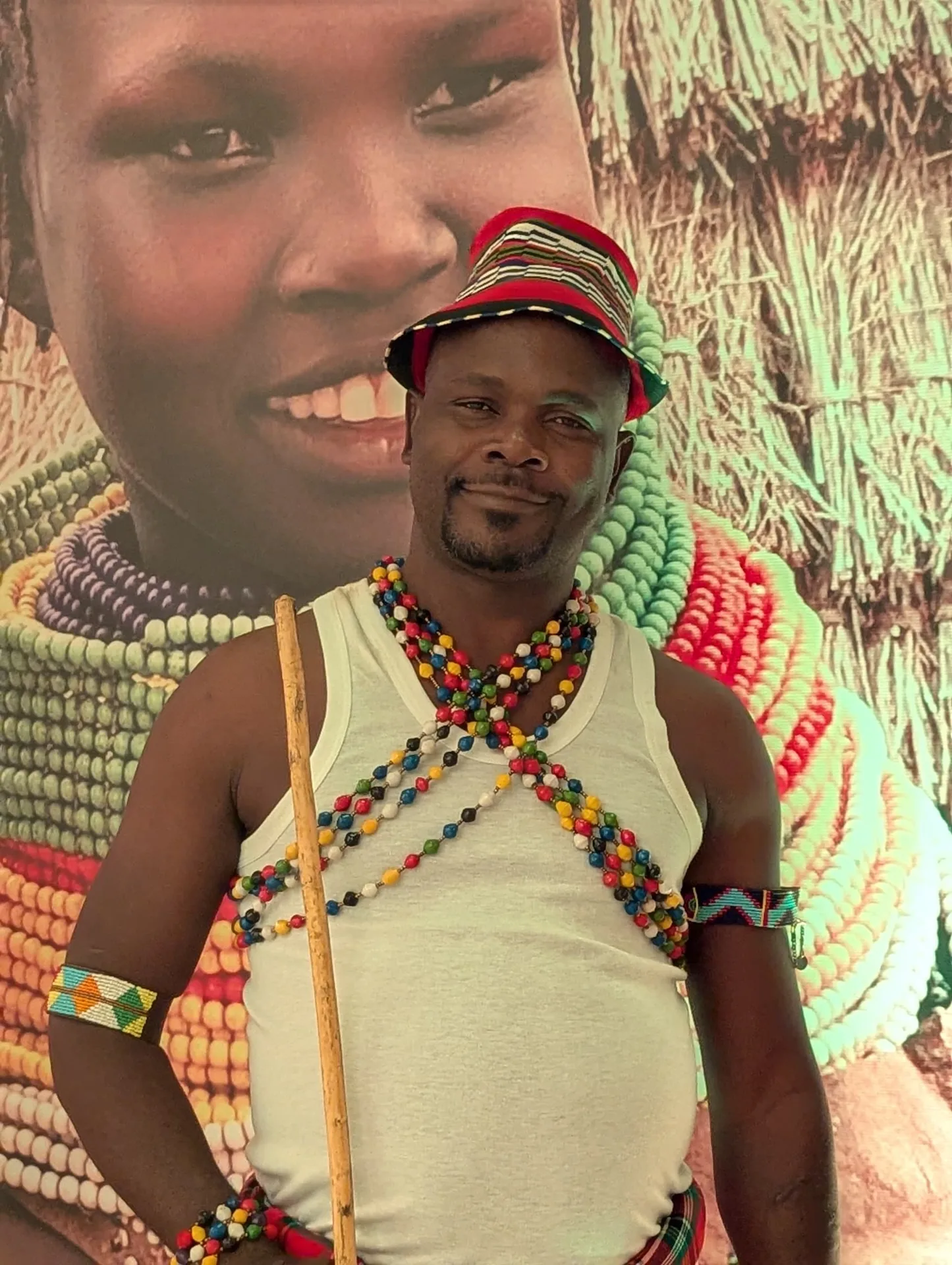
Alphar Dadaire, founder of Dadaire Charity Organization.
Meet our founder
Alphar Dadaire
With ancestral roots in eastern Uganda, Alphar now lives in Kampala with his family. The purpose behind Dadaire Charity Organization is closely connected to his own upbringing, the support he received, and the difference that care has made within his family.
As one of six children raised amid difficult family circumstances, he experienced the uncertainty that comes when basic needs and stable support cannot be taken for granted. His mother carried the responsibility of caring for the children, with his maternal grandparents later helping to raise them.
Those experiences deepened his empathy for parents facing impossible choices and for children whose opportunities are constrained by circumstances beyond their control.
Turning hardship into a commitment to others
Rather than allowing those early challenges to define his future, Alphar sought to rebuild relationships and strengthen the foundation of his own family. He helped restore understanding among relatives and took practical steps to improve his parents’ living conditions.
He built homes for his parents in their village and provided land that would allow his mother to cultivate food and support herself. To him, the most meaningful result was not the construction or the land itself. It was seeing his mother gain greater stability and become able to help others.
“A woman who used to have nothing to eat is now the one giving food to the community.”
Alphar Dadaire, reflecting on his mother’s journey
That change reinforced a conviction that runs through the organization’s purpose: assistance is most meaningful when it restores dignity and creates room for people to build on their own strengths.
Compassion expressed through action
Alphar’s commitment to service grew alongside the support of his wife, who shares his desire to help people facing hardship. During the COVID-19 pandemic, when uncertainty and food insecurity affected many households, they worked together to provide food assistance.
According to Alphar’s account, their family-led efforts supported more than 1,000 families during that period. This account describes assistance undertaken by Alphar and his wife; it is separate from Dadaire Charity Organization’s subsequent programme-reach reporting.
For the family, the experience showed how quickly circumstances can change and why timely, respectful support matters. It also strengthened their determination to make compassion a sustained commitment rather than a response to a single emergency.
Building a lasting purpose
Dadaire Charity Organization grew from this personal commitment into a broader ambition to work alongside vulnerable individuals and communities in Uganda. Its eight charitable focus areas bring together humanitarian relief, education, healthcare, livelihoods, social inclusion, environmental care, community development and advocacy.
Alphar also hopes to explore how responsible business activity, including tourism, can create opportunities that benefit local communities. That is a forward-looking ambition, not a claim that a tourism programme has already been established.
His understanding of success reaches beyond personal achievements. It includes seeing a family regain security, a young person find an opportunity, or a community gain the resources and confidence to move forward.
“My greatest happiness is seeing a smile on someone’s face. I know what it means to struggle, and I want to use the blessings I have received to help others find hope, dignity, and a better future.”
Alphar Dadaire
That is the spirit Dadaire Charity Organization seeks to carry into its work: listening first, responding with care, partnering responsibly and building opportunities that can endure.
The supplied Uganda Registration Services Bureau forms identify the proposed company as Dadaire Charity Organization Limited, a company limited by guarantee without share capital. The application and related signed forms are dated 29 September 2026 and set out the organization’s charitable objectives. Our public-facing brand is Dadaire Charity Organization. The supplied documents do not include a certificate of incorporation, so the final legal-registration wording must be checked against the issued certificate before publication.
The company application is not, by itself, evidence of an issued company registration, a separate NGO permit, tax exemption, charitable accreditation or membership of an international network. When such credentials are applicable and available, they should be published with verifiable details. We believe public trust depends on precision about organizational status as much as it depends on strong intentions.
Our recorded contact location is Kavumba Ward, Wakiso Town Council, Wakiso, Uganda. Being rooted in Uganda means our work should respond to local realities and complement relevant services rather than import a one-size-fits-all model. As programmes develop, we want community priorities and feasible partnerships to guide how we put our mandate into practice.
The People and Communities Behind Our Purpose
An education challenge rarely stands alone. A child may miss class because of school materials, family income or a health concern. A livelihood challenge may affect whether a caregiver can meet basic needs. An environmental problem may become a health problem when households lack safe water or adequate waste management. These connections explain why our mandate spans eight causes.
We want to respond with the appropriate level of support. Sometimes a focused activity may be enough. At other times the situation may call for referrals, specialist services, local government coordination or a longer-term plan. The right response should depend on assessed needs and available capacity, not on the desire to present a bigger project.
Listening must include the people often left out of public meetings, such as adolescents, caregivers managing several responsibilities and persons who encounter accessibility barriers. Their participation can reveal practical issues that would otherwise remain hidden.
What We Aim to Do
Our charitable objectives provide for food and clothing assistance, emergency relief, safe water initiatives and shelter-related support. They also provide for school fees and learning materials, classroom improvements, digital literacy and vocational education. Health objectives cover outreach, awareness, maternal and child wellbeing and menstrual hygiene.
On the economic side, our mandate includes enterprise development, savings groups, agricultural assistance, work readiness and mentorship. Social inclusion activities may address violence awareness, support for vulnerable children, leadership development and disability inclusion. We also identify environmental action, community infrastructure, public education and constructive advocacy as areas of potential work.
These objectives describe the scope of the organization. They should not be read as a claim that each proposed activity has already taken place. Individual project pages and updates should state their current status, location, partners, beneficiaries and available results when that evidence exists.
The first task is to understand what people need, what support already exists and what may be getting in the way. A well-intended idea can still miss a community’s actual priorities. Listening helps make an activity more relevant.
Plan for realistic delivery
Clear objectives help people know what to expect. Before implementing a project, responsible planning should consider budgets, staff or volunteers, specialist expertise, permissions, safeguarding and the practical needs of the location.
Work alongside capable partners
Schools, health professionals, farmers’ groups, community leaders, public departments and other organizations may already be addressing related needs. Cooperation can avoid duplication and strengthen the pathway from a short activity to a useful result.
Review what changed
We distinguish between the number of people who participate, the support provided and the outcome a person or community experiences. We aim to learn from evidence and feedback rather than assume that completing an activity automatically creates lasting impact.
Understanding Our Impact
Dadaire Charity Organization reports that 128 people have been reached in Uganda. This figure is supplied by the organization without a specified reporting period, programme breakdown or independently reviewed method. We present it as a reported reach figure, not as proof that 128 people experienced the same result or that every intervention has a measured long-term outcome.
As future reporting becomes available, useful information may include the type of support provided, number of participants, geographical area, relevant dates and follow-up findings. Wherever appropriate, we should explain how people were counted and avoid double-counting across activities. We should also record lessons and feedback in ways that protect confidentiality.
A small, credible record of progress is more useful than a sweeping claim that no one can verify. Transparent reporting gives communities a stronger voice and helps funders make decisions based on evidence.
A Commitment to Safe and Respectful Engagement
Children and adults who receive support have rights, expectations and legitimate concerns. Programme planning should account for consent, privacy, safe handling of personal information and appropriate referral pathways when specialist support is required. Medical services belong in the hands of qualified providers, and protection concerns must be treated seriously.
We also recognize that collecting a photograph, quote or personal history can create risk. Public communication should never pressure a family to reveal sensitive details as the price of receiving assistance. As safeguarding procedures are formalized, relevant contact routes and approved policies should be made available for review.
Working With Donors, Government and Partners
We welcome conversations with people and institutions seeking responsible ways to support community needs in Uganda. A donor may want to support school materials or essential relief items. A business may be able to provide equipment, mentoring or technical expertise. A government department may be exploring a complementary community initiative that requires local coordination and agreed responsibilities.
A productive discussion begins with clarity: what is the need, who is the intended beneficiary, what resources are required, who will implement, and what evidence could demonstrate progress? We want partnerships shaped by these questions, not by promises made before proper assessment.
Our ambition is to build an organization that people can approach with confidence, question openly and evaluate fairly. Sustainable change takes patience, and the first step is honest collaboration.
View documents supplied by the organisation concerning its registration and governance. These are downloadable PDFs and may include personal information.